NHBSR: Aligned and Amplified
by Andrew Schuyler
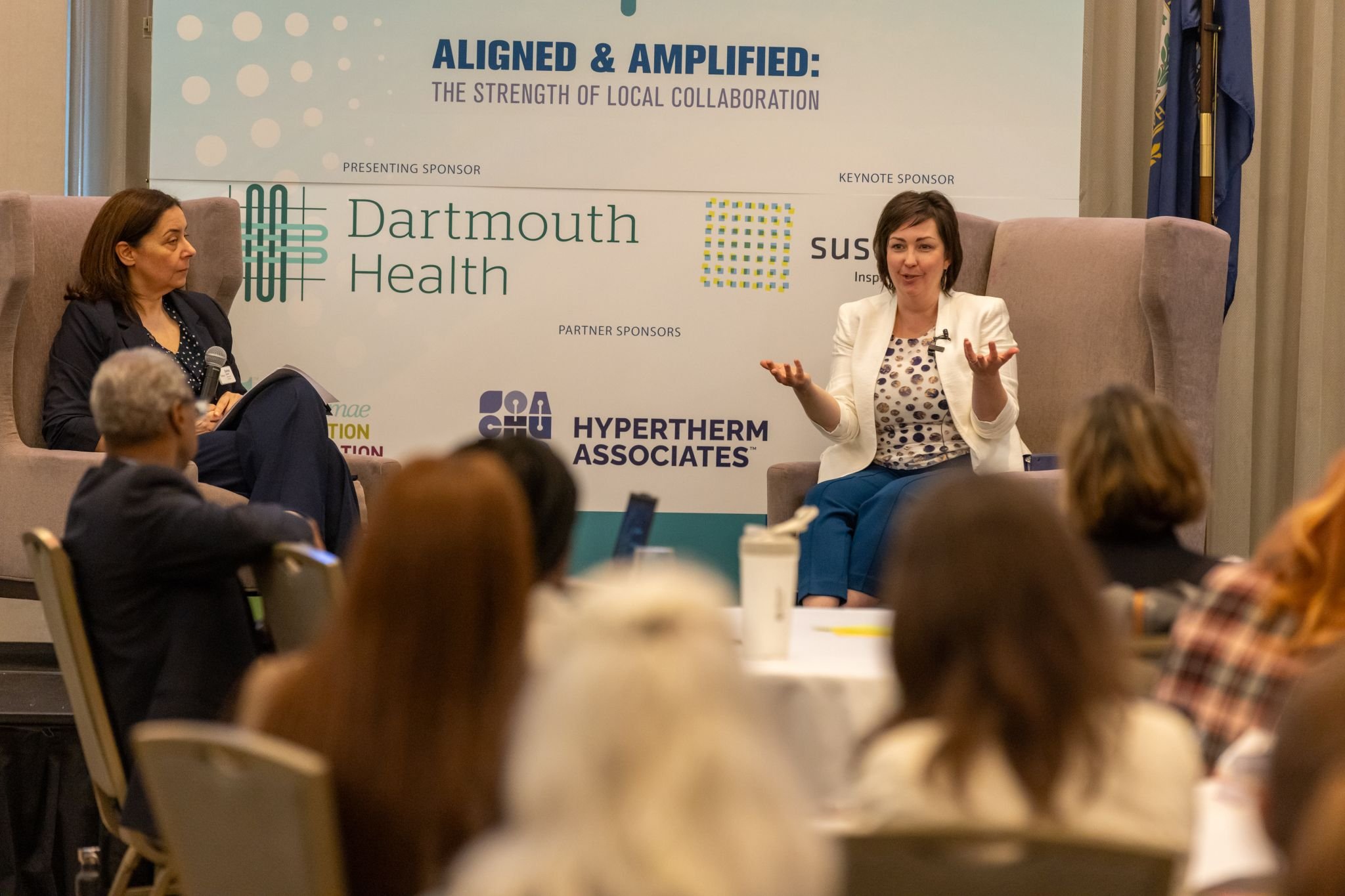
Recently, I attended the New Hampshire Businesses for Social Responsibility Spring Conference, “Aligned and Amplified: The Strength of Local Collaboration.” In her opening remarks, NHBSR Executive Director Zeina Eyceoz named the many pressures facing businesses today: economic uncertainty, AI disruption, housing shortages, childcare costs, energy challenges, and growing polarization.
These issues are very real for businesses across New Hampshire, including those in the outdoor economy. But Eyceoz also offered a clear path forward: “action is the only antidote to overwhelm.” Her message was simple and timely — when national narratives pull people apart, local action can pull communities together.
Many of the themes we explore through GO: Sustainable — innovation, risk, circularity, social impact, and community resilience — were front and center throughout the conference. Below are a few takeaways that may resonate with GOA members.
Make Sustainability Part of How You Operate
Shifting stakeholder patterns and return on return on investment opportunities require a wholesale rethinking of sustainability. Much like the outdoor industry’s evolution from a nice-to-have into a pillar of economic growth, sustainability has moved beyond expendability to a critical asset in risk mitigation and innovation. Organizations can define and prioritize materiality, include sustainability metrics in performance reviews, and connect sustainability to business value. Many companies initiate action with incremental measures, like introducing recycled content to a product line or offering incentives for end use disposal. This can lead to transformative change, such as achieving zero operational waste, that yields higher financial, reputational, and other benefits.
Bottom Line: Operationalizing sustainability is not about doing more; rather it’s prioritizing your values and focusing on how they can inform directionality.
Uncertainty is the Devil’s Playground
From global tariff wars to actual war, NH companies are struggling with supply chain disruption and energy costs. Combine that with evaporating tax credits, legal ambiguity, and regulatory whiplash, and the short-term outlook is mixed, at best. The good news is that deploying sustainability strategies acts as a hedge against uncertainty because it can, for example, provide pathways to unconventional financial and natural resources. Additionally, many NH policy makers are open to learning about in-state productivity and want to be associated with organizations that are innovating while improving communities.
Bottom Line: Elected officials are more likely to grasp the need for stability when they see your product (and/or facility) firsthand, its impact on NH, and your willingness to engage cross sector.
Celebrate Wins Through Storytelling
Several speakers acknowledged the challenges and opportunities associated with effectively communicating the sustainability credentials of a product or service. Despite a recent trend of greenwashing (overstating) morphing into greenhushing (understating), there was widespread consensus among speakers that the benefits of credible sustainability storytelling far outweigh any fallbacks. And while demonstrating environmental attributes is important, a focus on people, wellbeing, and finances can earn a range of dividends.
Bottom line: Showcase sustainability success with enthusiasm, integrity, and facts, all the while demonstrating that your efforts are helping protect your stakeholders’ health and/or wealth.
Know Your Audience and Speak Their Language
While this applies to storytelling, it expands much further to include investors, policymakers, co-workers, and other stakeholders. Many organizations noted that they are tweaking the language they use so it does not create barriers. Words like “climate” and “diversity” have, in some camps, become pejoratives. Rather than trying to convince these decision makers on the science, for instance, prioritize the financial and risk benefits that accompany a particular action. Importantly, this strategy is often necessary for internal discussions with boards and leadership.
Bottom Line: Meet people where they are, and focus on outcomes, not semantics.
Community Should Be Our True North
Keynote speaker and co-author of The Upswing Shaylyn Romney Garrett provided context to the current headwinds the U.S. faces related to political tribalism and hyper individualism. The country experienced similar divisions in the late 1800s, yet was able to more or less come together for the next half century. This was the result of moving from an “I” to a “we” ethos through shared values like strong relationships, community connection, and social capital. While we’ve been in a downturn in this capacity for the last several decades, Romney Garrett sees reasons for optimism, as well as a multitude of benefits for society–including businesses–by correcting course through civic and community engagement.
Bottom Line: Collaboration is key, and partnerships like those between Burgeon Outdoor and the Appalachian Mountain Club or Terracea and Minus33 demonstrate that organizational agency–the power to act–can create multiple win scenarios that are durable and replicable.
Final Takeaways
For GOA members, the takeaway is clear: sustainability is not a side project. It is a business strategy, a community-building tool, and a way to create resilience in uncertain times. The organizations that can communicate their values clearly, collaborate locally, and act with credibility will be better positioned for whatever comes next.
Next year’s NHBSR Spring conference is scheduled for May 20, 2027. Visit NHBSR.org for more information.
About the Author
Andrew Schuyler splits his time between Conway, NH and Melrose, MA. He serves on the Board of the White Mountains Interpretive Association and has a background in sustainability, journalism, government affairs, and parenting. Andrew grew up in Wisconsin, where the summers are muggy and buggy and the winters are brisk; kinda like New Hampshire. Reach Andrew at andrew@graniteoutdoor.org.