The Business Case for the Roadless Rule
ELEVATE YOUR BUSINESS VOICE.
The White Mountains are not just scenery on the horizon. They are part of New Hampshire’s economic infrastructure.
For most people, the Roadless Rule sounds like a conservation issue. For New Hampshire businesses, it is also about customers, workers, investment, quality of life and the economic value of the landscape itself. That is why Granite Outdoor Alliance (GOA) is making the business case for the Roadless Rule.
The U.S. Department of Agriculture is proposing to rescind the 2001 Roadless Area Conservation Rule, which generally restricts road construction, road reconstruction and timber harvesting in inventoried roadless areas of the National Forest System. Approximately 235,000 acres of the White Mountain National Forest’s roughly 800,000 acres are currently covered by the rule.
GOA has submitted formal comments opposing wholesale rescission because those public lands already support substantial economic value and business reliance.
Outdoor recreation contributed approximately $4.2 billion in value added to New Hampshire’s economy in 2024 and supported more than 33,000 jobs. But the economic value of the outdoors is broader than tourism — and broader than outdoor recreation statistics alone. It reaches retail, manufacturing, hospitality and recreation, while the landscape itself influences where people choose to live, work, start businesses, recruit employees and invest.
Some people come to the White Mountains for a weekend. Others choose to live here, build businesses here, raise families here or take jobs here because access to these places is part of the value proposition. That quality of life also helps employers attract and retain people.
The economic value of the White Mountains is not simply what visitors spend while they are here. It is also what the landscape makes possible for the people and businesses that stay.
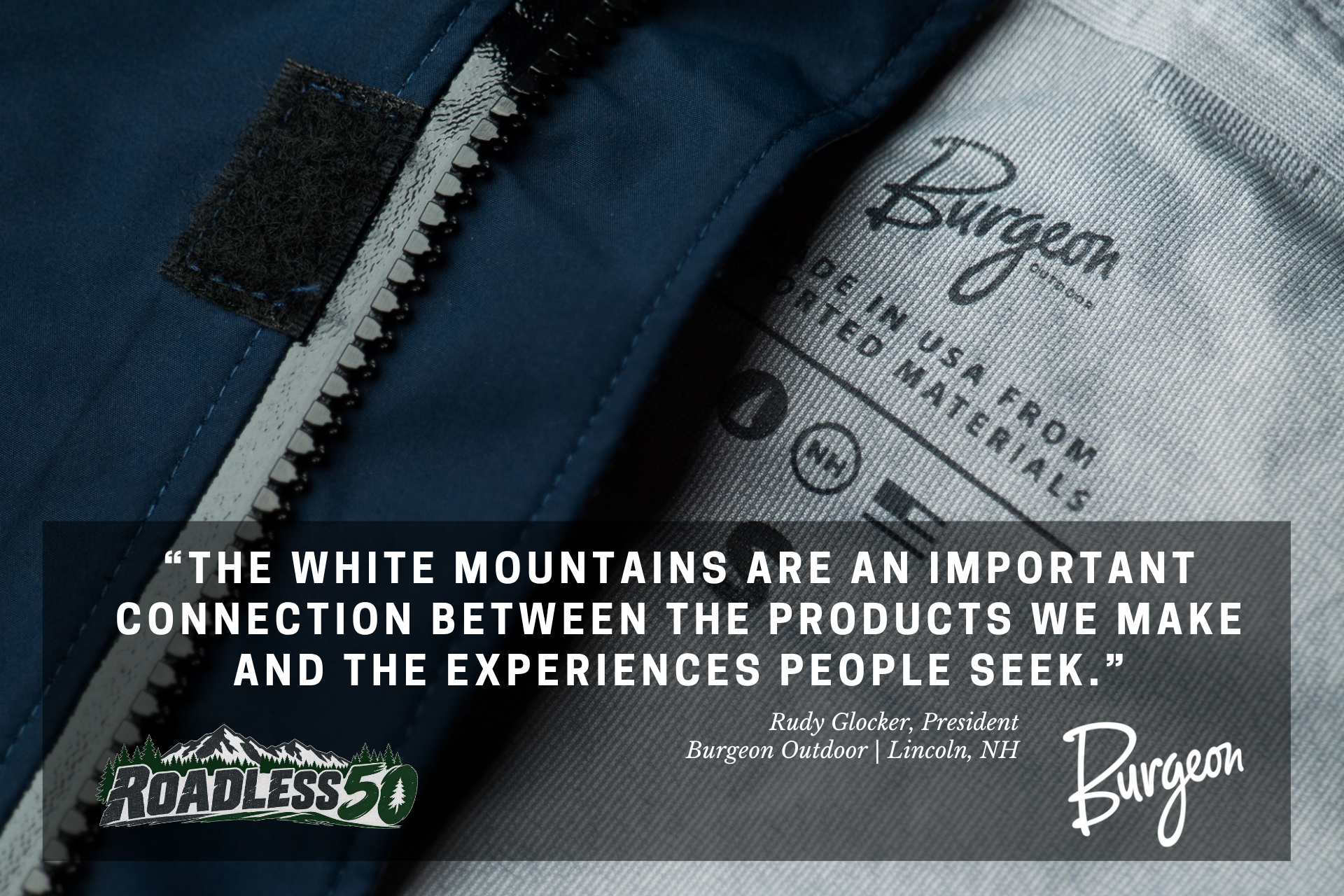
Consider Burgeon Outdoor, an apparel manufacturer in Lincoln. Founder and President Rudy Glocker says his company “relies on the broader outdoor community to sustain and grow its business” and calls the White Mountains “a vital economic resource.”
At White Mountain Ski Co. in North Conway, owner Andrew Drummond calls access to the White Mountains “a major driver of customer traffic,” creating demand for equipment, apparel and services.
Tobey Reichert, General Manager of the Mount Washington Auto Road, describes the surrounding landscape as “the foundation of our entire operation,” supporting seasonal jobs and spending throughout the region.
There is a little irony in having the Mount Washington Auto Road in a Roadless campaign — but it makes the point. The argument is not that roads have no place. It is that not every place needs a road to have economic value.
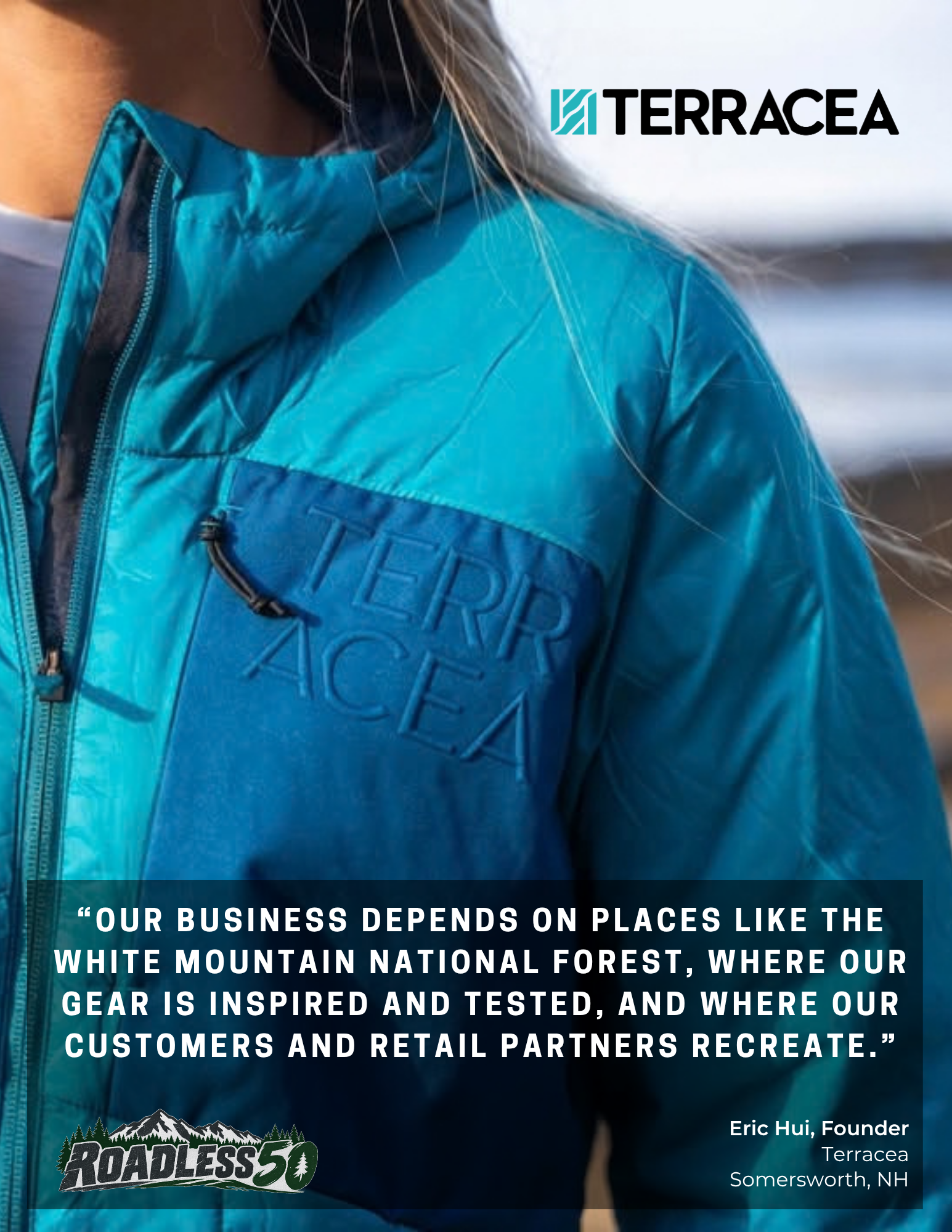
A company does not need to operate within a roadless area to depend economically on the landscape around it. A manufacturer can rely on the outdoor community for customers and employees. A retailer can rely on recreation for demand. Hotels and restaurants can rely on the people those landscapes attract. Employers across sectors benefit from the quality of life that helps bring workers and families to New Hampshire.
That same dependence creates economic risk. A hotel does not need a Forest Service permit to lose room nights, and a restaurant does not need to operate on federal land to lose customers if the qualities that draw people here are degraded or altered.
That is why GOA’s comments ask USDA to consider both sides of the economic ledger: What additional economic activity could rescission enable? What existing economic value and business reliance could it place at risk? And who carries those costs if that value is lost?
That does not make this an argument against active management. Rescission itself would not authorize a particular road or timber project, and GOA recognizes sustainable forestry, restoration, wildlife management, public safety and other legitimate uses of a working National Forest. The question is whether those needs require wholesale elimination of a national framework in place for roughly 25 years, or whether they can be addressed through existing authorities and narrower changes.
To broaden that business record, GOA launched ROADLESS 50, an effort to mobilize 50 New Hampshire businesses and outdoor-affiliated organizations to submit their own comments.

The goal is not 50 copies of the same letter. It is 50 individual business perspectives explaining how public lands connect to customers, employees, investment, workforce, quality of life and community. Together, those comments can show that the economic consequences of land-management decisions extend well beyond businesses operating directly on federal land.
The federal comment deadline is Oct. 6.
The Roadless Rule debate is about land management. But in New Hampshire it is also about something businesses understand well: the value of an asset on which a much larger economic ecosystem already depends.
This thought piece was printed by the Union Leader on Wednesday, September 30, 2026.