Public Access Takes a Network
October 20, 2026
By Ericka Canales, Special Projects Manager
Outdoor access issues are often intensely local, and people closest to those issues usually understand them best. They know the place, its history, how people use it, and what has changed over time. But the decisions affecting those places don't always stay local. Transportation policy, state agencies, engineering standards, elected officials, businesses, conservation organizations, and recreational users can all become part of the same conversation.
Over the past several months, I've had an opportunity to represent Granite Outdoor Alliance through our involvement with the NH Coastal Access Coalition. This local coalition brings together Seacoast businesses, Surfrider Foundation New Hampshire Chapter, UNH Surfrider Club, recreational users, and residents concerned about maintaining public access to New Hampshire's coastline. GOA joined as concerns continued over potential parking restrictions along Route 1A in Rye.
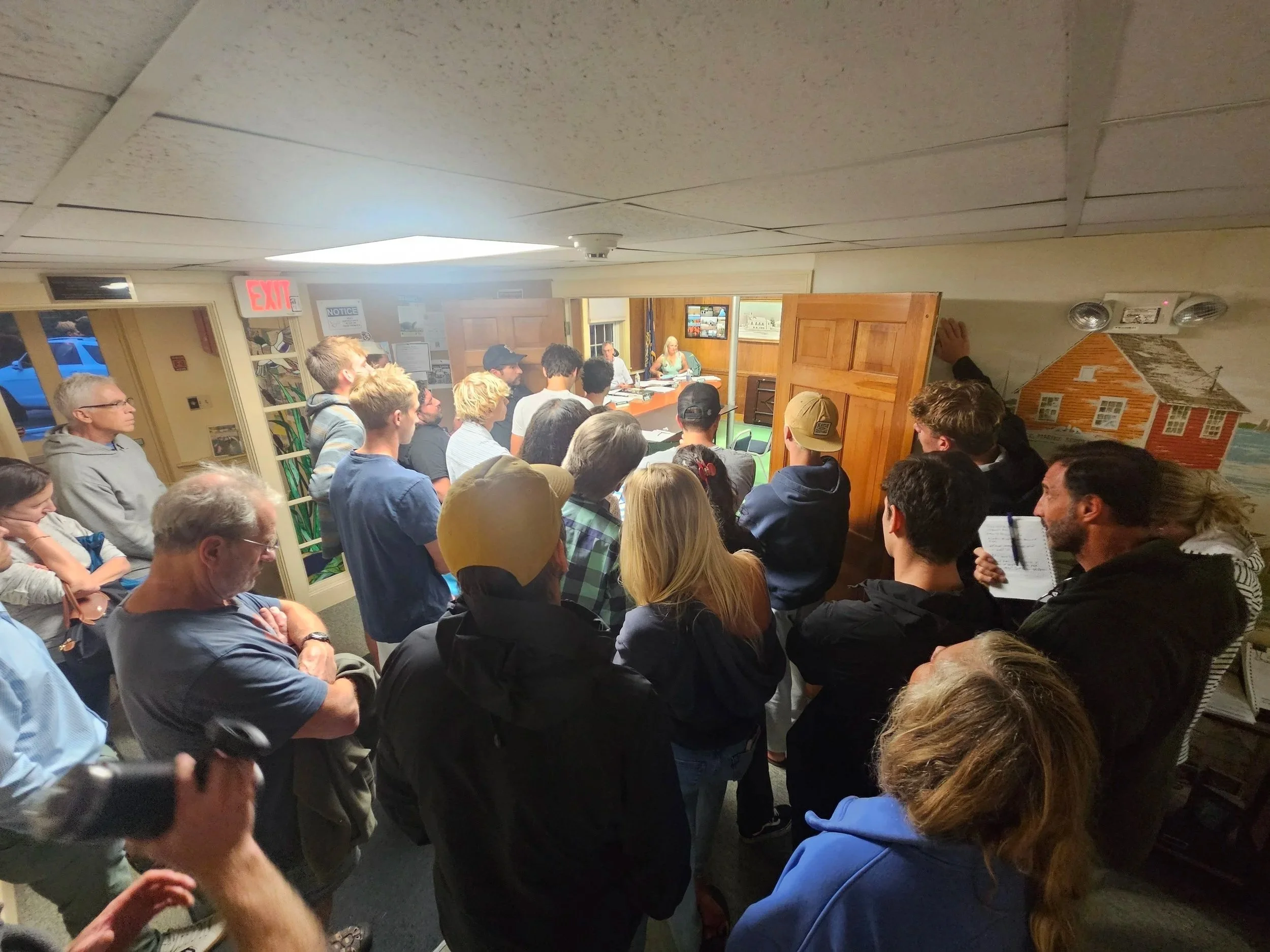
Members of the NH Coastal Access Coalition gather at a Rye Selectboard meeting to voice concerns over proposed changes to public beach access and roadside parking.
For me personally, there was a familiar connection. Before relocating to New Hampshire, I was Surfrider Foundation's Florida Regional Manager, where coastal access, beach management policy, and its complicated relationship between local, state, and federal decision-making were part of my everyday work. It also reminded me that something described as a "parking issue" is rarely just about parking. Along New Hampshire's coastline, parking is how people reach this public resource. And businesses depend, directly or indirectly, on people being able to use it.
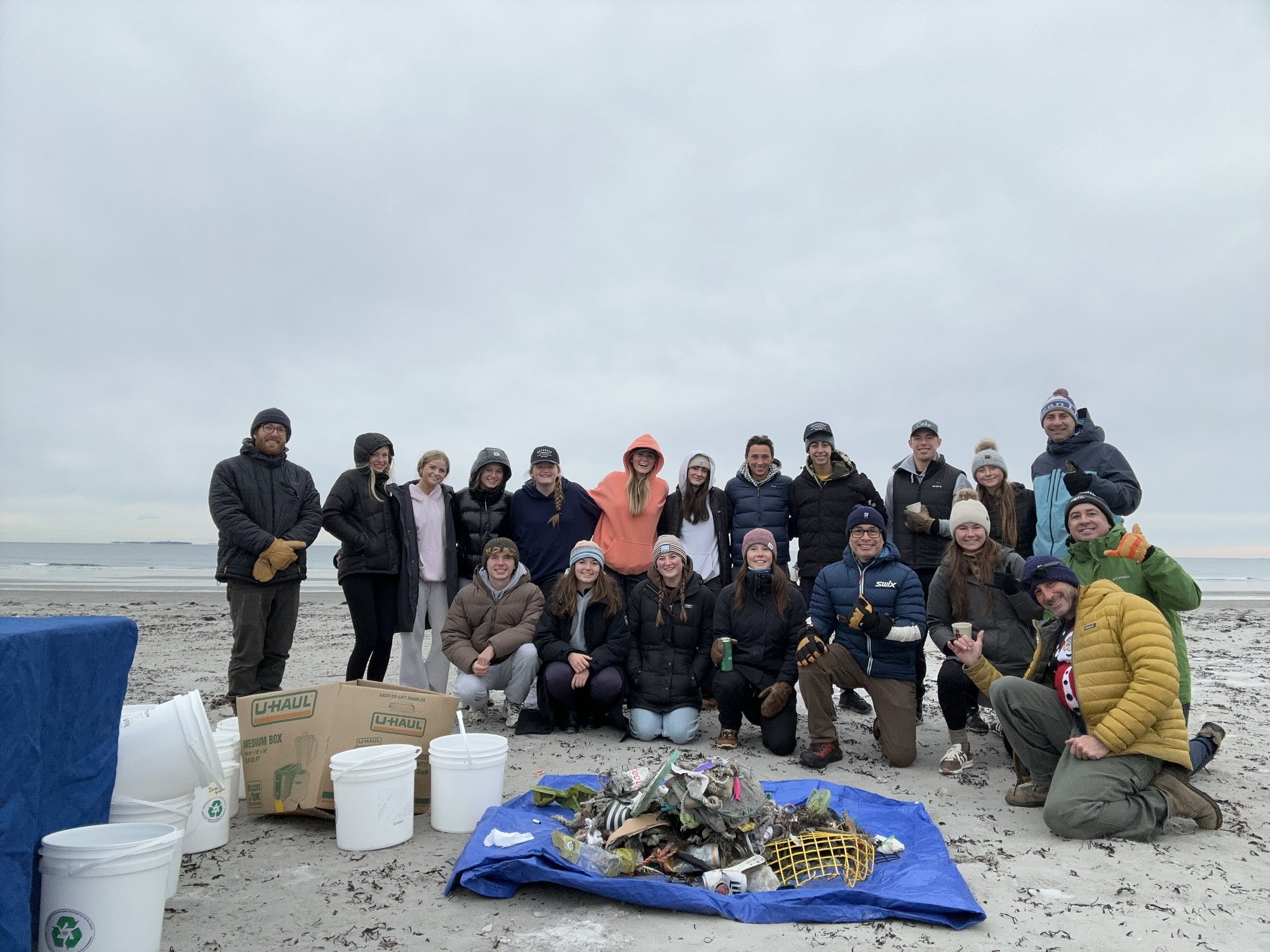
Surfrider Foundation New Hampshire Chapter volunteers come together for a beach cleanup, removing litter and marine debris from the shoreline.
That doesn't mean every parking space must remain exactly where it is. Safety matters for pedestrians, cyclists, residents, traffic flow, emergency access, conservation, and the realities of managing a heavily used coastline. The better question is how to consider all of those needs coexisting. That's where GOA's network can be particularly useful. Our role wasn't to come in and lead this coalition. Rather, we bring another layer of experience, relationships, and perspectives to the table. By participating in coalition conversations and drawing on previous coastal-access work, we helped connect the issue to the broader outdoor economy. We also tapped GOA's network of decisionmakers, state agency staff, and regional technical resources who could offer insight on the transportation, engineering, and policy questions involved.
The coalition made a request: before any parking changes along Route 1A, have the New Hampshire Department of Transportation independently look at the corridor and consider traffic and crash data, parking demand, pedestrian and bicycle safety, seasonal use, and how the roadway and parking system relate to public access.
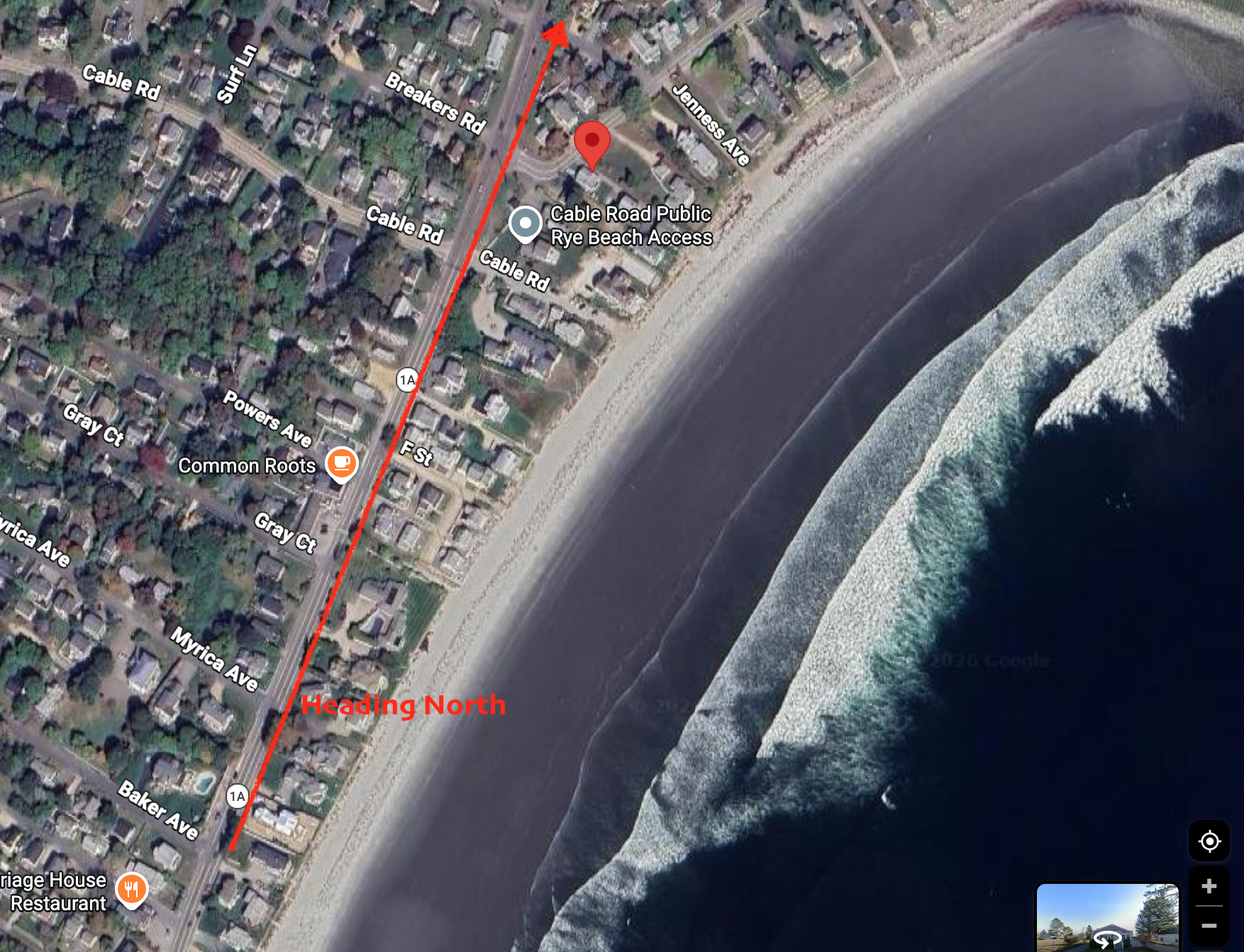
Map highlighting a section of Route 1A along Rye's coastline, from the vicinity of Baker Avenue north toward Cable Road and Jenness Beach. The highlighted corridor illustrates an area proposed to reduce public parking opportunities and limit access to the beach
Then the Town of Rye’s Parking Supply & Revenue Study came out. When we dug into the report, we found the study identified 101 parking spaces for removal, with 52 concentrated around Cable Road, Old Beach Road, Breakers Road, Jenness Avenue, and Atlantic Avenue. That matters because this stretch of Route 1A has historically been part of how people access Jenness State Beach and the surrounding coastline.
New Hampshire State Parks already recognized that relationship during planning for the redevelopment of Jenness State Beach back in 2018. The state lot accommodated only about 70 vehicles, while more than 400 additional vehicles parked along Ocean Boulevard, adjacent streets, and private lots within walking distance of the beach. During that construction, State Parks directed visitors toward parking along streets and designated beach access points.
The Town has recently indicated it isn't moving forward with its parking proposal at the moment; the coalition considers shelving the proposal a win and will continue to monitor the situation to ensure safety, roadway design, and public access can work together. And that's why this local issue connects to GOA's statewide role.
The Value of a Network
When we talk about the value of an alliance, it's easy to think about who's in the room. But a network is also a collection of experiences. Someone might have navigated a federal land-management process. Someone understands transportation or trail design. Another knows who to call to get state agency input. Or others may have worked through a similar issue elsewhere. GOA's role might look different depending on the issue and the community.
What GOA can do is make our network available to alliance members for these local issues. Sometimes that means bringing a larger outdoor-industry voice to the table. Other times it's connecting people with policymakers or technical resources, digging into a report, sharing research, or helping amplify an issue through our communications channels. That's what happened with the NH Coastal Access Coalition. The coalition brought deep local knowledge, relationships, businesses, and recreational users. GOA brought its network connections and experience to fit the issue.
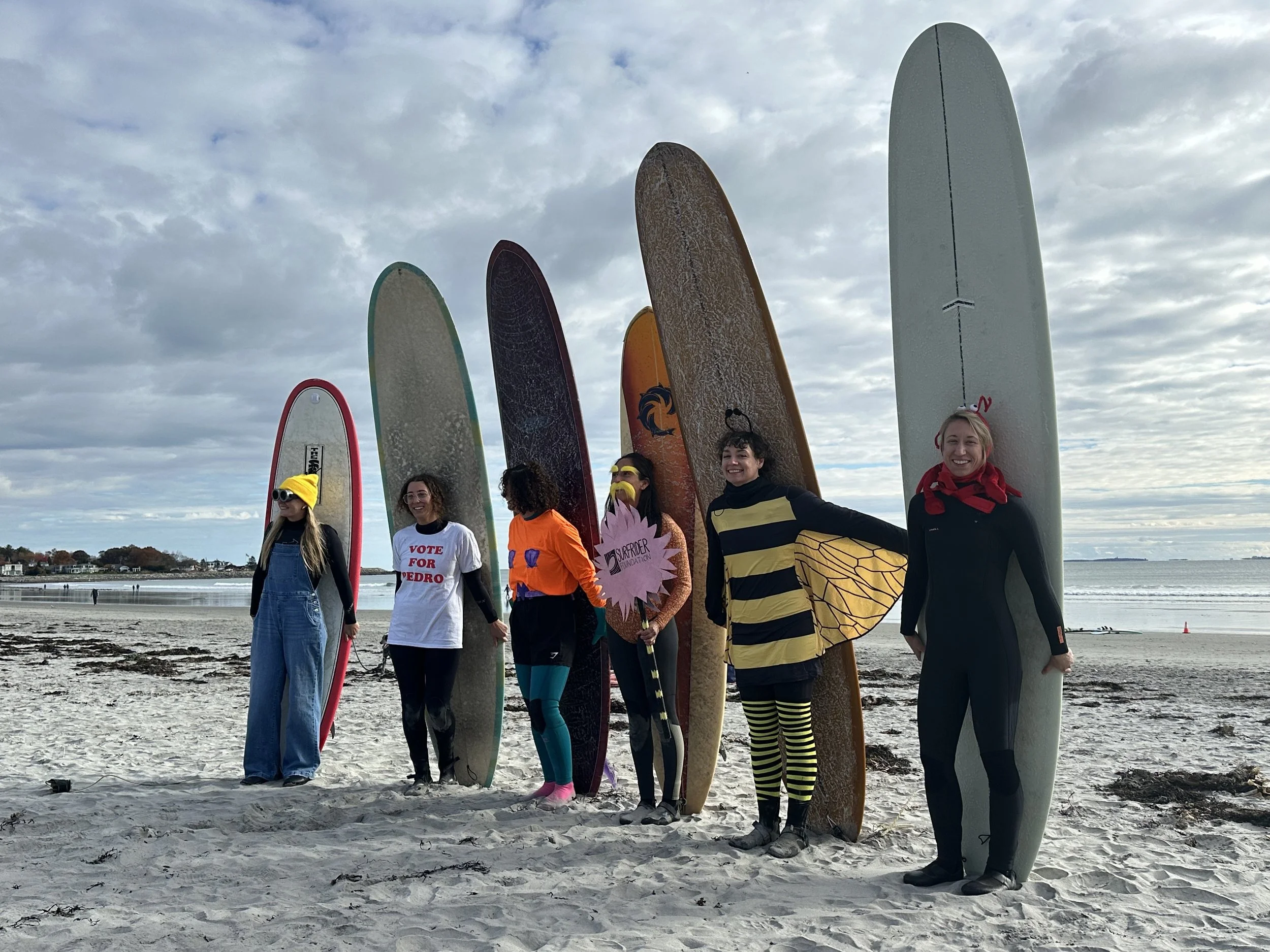
Participants celebrate the 2025 Halloween Longboard Contest at Jenness Beach
Whether it's beach access on the Seacoast, a trailhead in the White Mountains, a climbing area in the Lakes Region, or a river access point in the Monadnock Region, the issues can be different. But when local knowledge can connect with a broader network of experience and relationships, GOA can help move the conversation forward. That's exactly the role an alliance can play. It's also why we strive to grow our network. Every member brings another perspective, connection, and piece of experience to be shared across New Hampshire's outdoor community. If you're not already a member of Granite Outdoor Alliance, we'd love to add you to our quiver.
Stay up to date with the NH Coastal Access Coalition