Consumer confidence, affordability and the business of earning trust
November 25, 2026
Tyler T. Ray, Executive Director
It's that time of year again. Our inboxes are filling up with holiday promotions, ski areas are watching the weather, retailers are sizing up inventory, and somewhere between Black Friday and Cyber Monday, we're all trying to figure out what constitutes a good deal. At Granite Outdoor Alliance, we've just released our 2026 Outdoor Holiday Gift Guide, a collaborative effort to showcase the products, experiences and entrepreneurial spirit of New Hampshire's outdoor businesses. But putting together the guide also got us thinking about the business of holiday shopping itself. What are consumers really looking for this season? How do businesses compete in an increasingly crowded marketplace? And is there something about being local that gives our outdoor businesses a competitive edge?
Shop local. Gift Adventure. Do Good Business.
Last fall, in our SANDBOX piece Resilient by Nature: When Affordability Falls, the Outdoors Still Rises, we explored how the outdoor economy can remain resilient even as household budgets tighten. A year later, affordability remains central to the conversation, but the consumer landscape is evolving. For outdoor businesses, understanding those shifts could make the difference between simply navigating the holiday season and using it to build lasting customer relationships.
Consumer Confidence Is Up. Affordability Is Still a Thing.
Well, here's a little good news heading into the holidays. The Conference Board's November Consumer Confidence Index jumped 11.4 points to 103.3, reaching its highest level in nearly two years. As reported by SGB Media and CNBC, Americans are feeling more optimistic about employment and business conditions following the midterm elections, with slightly higher spending intentions for goods and vacations. Encouraging news for an industry that sells both.
But feeling better about the economy and having more money to spend are two different things.
Dig a little deeper and the numbers tell a more complicated story. While confidence improved across all age groups, with Gen Z recording the largest increase, the biggest gains by income were among higher-income households. Meanwhile, consumers' inflation expectations for the coming year remain elevated at 5.7%, and concerns about everyday expenses haven't gone away.
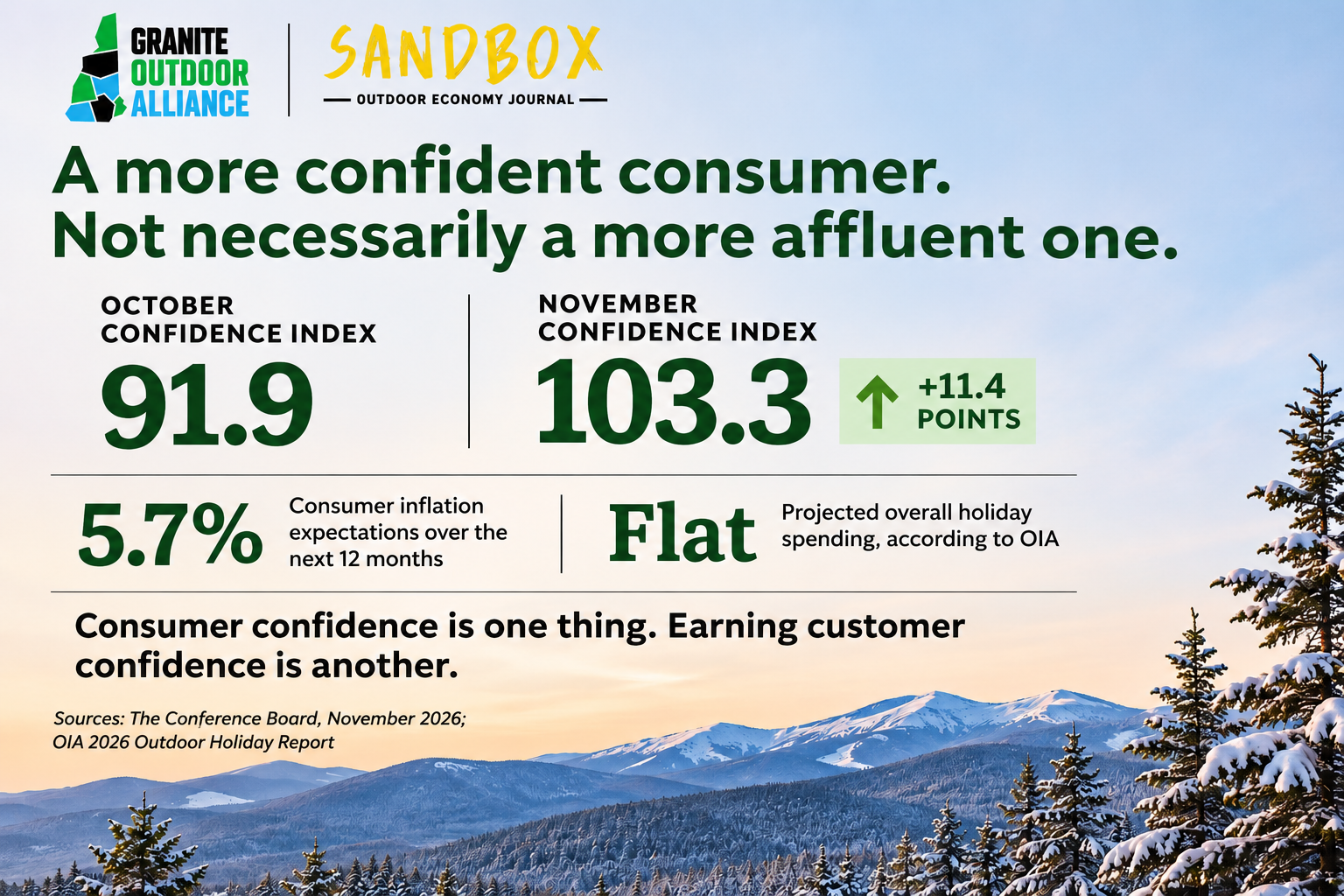
That aligns with findings from the Outdoor Industry Association's 2026 Outdoor Holiday Report. While overall holiday spending is projected to remain relatively flat, the topline masks a divide between households increasing their holiday budgets and those pulling back. In other words, we're heading into a holiday season with a more confident consumer, but not necessarily a more affluent one.
What does that mean for New Hampshire's outdoor businesses? The customer walking into an outdoor specialty shop in Littleton may be looking for a premium technical jacket, while the next customer may simply be looking for an affordable way to get their family outside this winter. Both represent business opportunities, but reaching them requires different approaches to pricing, product selection, promotion and customer service.
“Consumer confidence may be making a comeback. For businesses, earning customer confidence is a year-round endeavor.”
The opportunity isn't necessarily to sell more expensive products or to discount everything in sight. It's to meet customers where they are, help them understand the value of what they're buying and give them a reason to come back.
Consumer confidence may be making a comeback. For businesses, earning customer confidence is a year-round endeavor.
Local Brand = Trust
There's an interesting irony in the evolution of holiday retail. At a time when consumers have more shopping tools, more product information and more choices than ever before, knowing what—and whom—to trust can feel increasingly complicated.
A recent Retail Brew article highlighted research questioning whether some highly promoted Black Friday discounts actually represent the best available prices. While some of the findings are disputed, the broader issue of consumer skepticism deserves attention.
Perhaps there's an opportunity here for local businesses.
Knowing the people behind a product, understanding how it's made, getting advice from someone who actually uses it, or knowing there's someone nearby to help if something goes wrong all contribute to a sense of confidence that is difficult to replicate through an online marketplace.
“In a marketplace increasingly driven by algorithms, human connection is still a pretty good business model.”
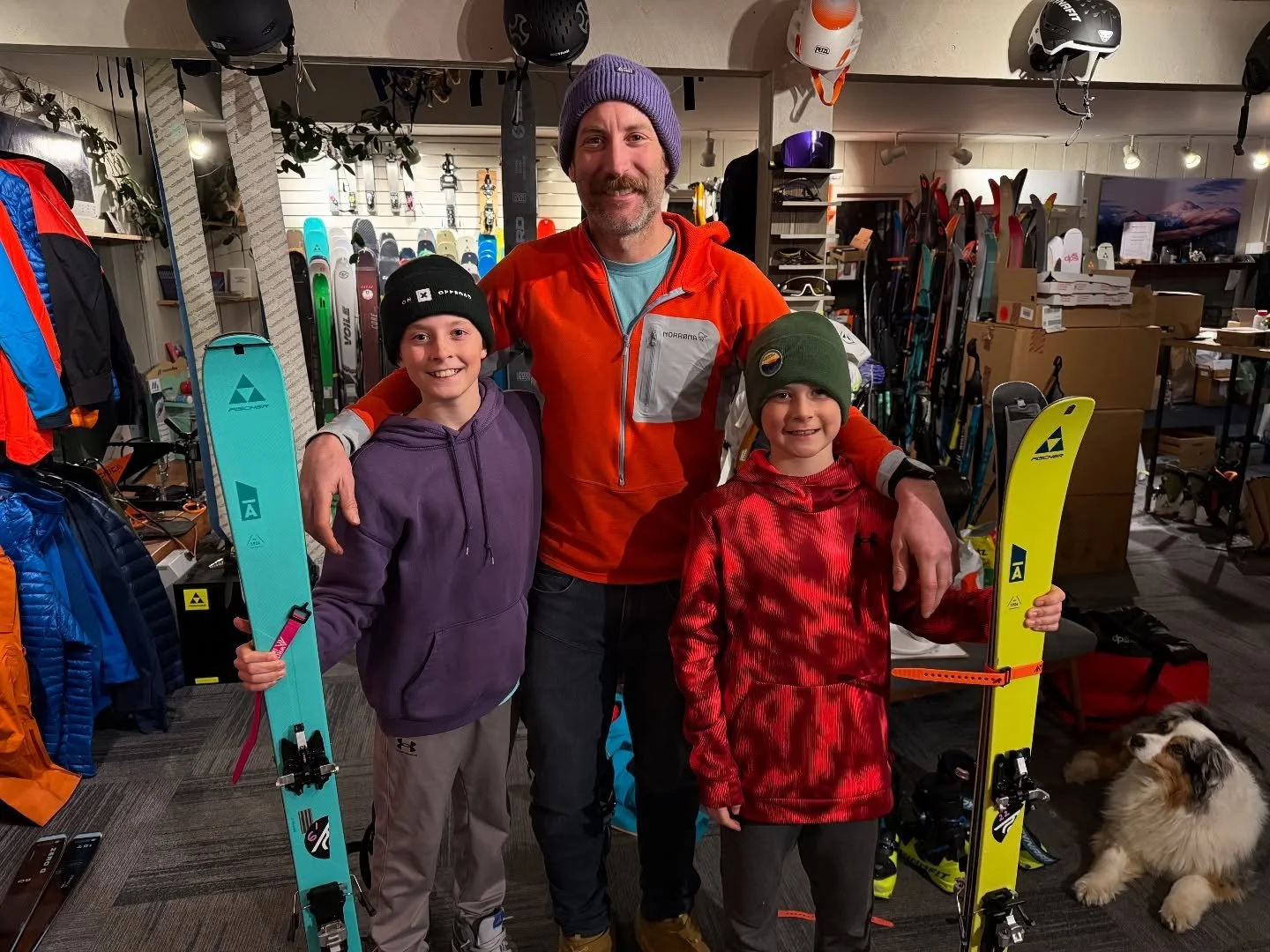
Think about the outdoor businesses we have here in New Hampshire. The apparel designer who understands a White Mountains winter. The specialty retailer who knows which skis will actually work for the terrain you frequent. The manufacturer who can explain the materials, construction and lifespan of a product. The local guide who knows when and where to take a family out for their first adventure.
These relationships are business assets. They differentiate brands, encourage repeat purchases and help customers feel more comfortable investing in quality.
Being local doesn't automatically earn trust, but it gives businesses a meaningful opportunity to build it.
In a marketplace increasingly driven by algorithms, human connection is still a pretty good business model.
Competing on Value, Not Just Price
For small businesses, the pressure to participate in aggressive holiday promotions is real. Consumers have come to expect discounts, but competing primarily on price can quickly erode margins, particularly for independent retailers and manufacturers managing their own production and operating costs.
So how do we make the holiday season work for both sides of the checkout counter?
Consider building product assortments around different budgets and levels of participation. An accessible entry-level product can introduce someone to a brand without compromising its premium offerings. Everyday outdoor apparel, accessories and small giftable items can create opportunities to reach customers who aren't quite ready to invest in bigger-ticket equipment.
There's also room to get creative with promotions. Product bundles, complimentary services, loyalty rewards, meaningful gifts with purchase and partnerships with neighboring businesses can add genuine value without relying exclusively on markdowns.
And don't underestimate the importance of product education. Explaining why a piece of gear costs what it does, how long it might last, how it performs and how many ways it can be used helps customers make more informed decisions. A well-made layer worn hundreds of times may ultimately be a much better investment than three less expensive alternatives.
For outdoor businesses, affordability and quality don't have to be competing values. Helping people find the right product at the right price is part of making the outdoors more accessible.
Make the Shopping Experience an Outdoor Experience
We're in an industry that sells considerably more than things.
A pair of skis represents a winter of possibilities. A sleeping bag might be the beginning of someone's first backpacking trip. A guided outing can introduce a family to an entirely new activity. A gift certificate for an outdoor experience might be the nudge someone needs to try something they've been thinking about for years.
That's a powerful distinction for outdoor brands, retailers and recreation providers, particularly when consumers are being more intentional about discretionary spending.
What if specialty retailers partnered with local guides to offer introductory experiences? What if an apparel purchase came with an invitation to a community outing? Could a local coffee company, outdoor retailer and recreation provider collaborate on a holiday package? Could ski areas make it easier for experienced skiers to gift a first-time experience to someone new to the sport?
“We’re in an industry that sells considerably more than things.”
These aren't just marketing opportunities. They're opportunities to develop new participants, introduce customers to complementary businesses and create relationships that extend well beyond December.
There's a digital component to this, too. OIA identifies artificial intelligence as an increasingly influential tool in consumers' shopping journeys. More detailed product descriptions, clearly communicated pricing, useful educational content and up-to-date information about local availability can help businesses become easier to discover, whether customers are searching through traditional channels or asking an AI assistant for recommendations.
Technology may help bring customers to the door. The experience they have once they get there is what can bring them back.
The Holiday Opportunity Beyond Retail
One of the conversations we've been having more frequently at GOA is how New Hampshire's outdoor businesses can reach customers outside their traditional markets.
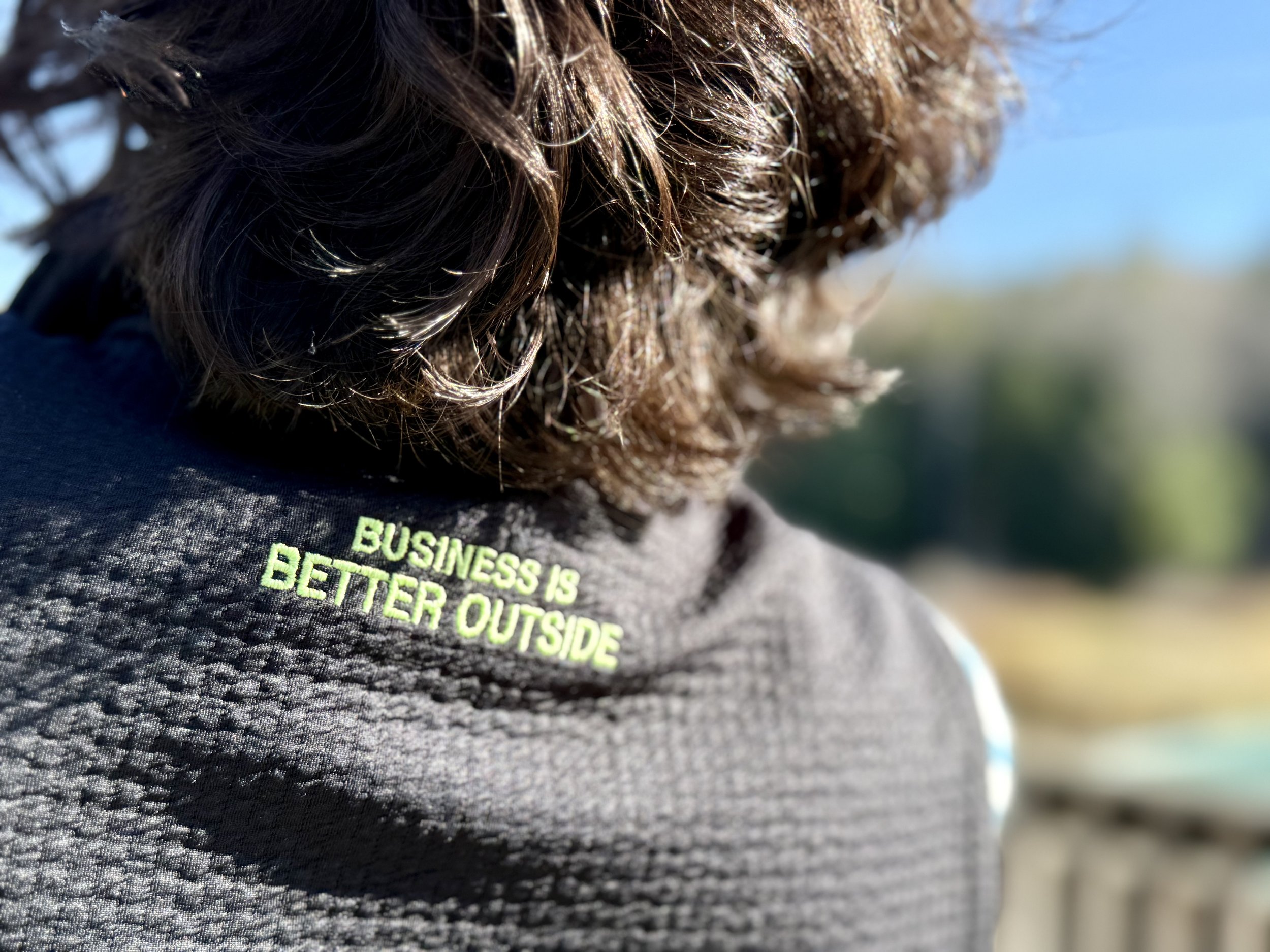
At the recent NH Life Sciences conference in Salem, for example, we introduced companies from an entirely different sector to products and experiences offered by GOA members. Similarly, at a recent GOA strategic planning session, we developed co-branded GOA vests, all manufactured in Intervale by Ragged Mountain Equipment. The board, staff and advisors (now looking sharp!) meet folks from different sectors on a daily basis. These conversations open up possibilities around corporate gifting, employee recognition, workplace wellness and team experiences. That's reach.
The holiday season presents a particularly timely opportunity to develop those relationships.
For employers, sourcing holiday gifts from a New Hampshire outdoor brand can turn an ordinary year-end gesture into something more personal and connected to place. Co-branded apparel, locally designed gear, recreation passes and guided experiences can all reinforce company culture while supporting other businesses in the state.
For outdoor brands and recreation providers, developing corporate sales programs can help diversify revenue, introduce products to new audiences and build relationships with employers across industries. And those relationships needn't end with the holidays. Employee onboarding, professional retreats, wellness programs and team-building activities present opportunities throughout the year.
Imagine a New Hampshire employer using a locally produced vest as an employee gift, organizing a guided winter outing for its team, or offering recreation passes as part of its wellness benefits. In each case, an investment in employees also becomes an investment in the state's outdoor economy.
That's the kind of cross-industry business development we want to see more of.
Shopping Local Is a Two-Way Street
It's easy to encourage consumers to shop local this time of year. But the responsibility for making that experience worthwhile doesn't belong solely to the consumer.
Businesses need to make it easy to discover their products, understand their value and complete a purchase. Brands and retailers need to support one another. Communities need to create welcoming places to shop and recreate. Employers can look closer to home when deciding where to spend their corporate dollars.
And collectively, we can do a better job telling the story of what it means to support New Hampshire's outdoor economy.
That doesn't mean every product needs to be manufactured here, nor does it mean consumers should feel obligated to pay more than they can afford. It means recognizing the economic relationships that exist between our manufacturers, designers, retailers, guides, recreation providers and communities—and finding ways to strengthen them.
That's part of the idea behind GOA's 2026 Outdoor Holiday Gift Guide. By bringing together businesses from across our membership, we're creating a shared platform for discovery, promotion and collaboration. A customer who comes looking for one familiar brand might leave having discovered three others.
There's value in that for everyone.
The Takeaway
This holiday season may bring renewed consumer optimism, but it won't erase the affordability challenges facing many households or the operating pressures facing small businesses. The opportunity for New Hampshire's outdoor industry is to respond to those realities with creativity rather than simply competing for a larger share of a limited wallet.
Build trust. Create genuine value. Make participation easier. Find new business partners. Give people an experience worth coming back for.
And when the holiday rush settles down, consider measuring success not only by what was sold, but by the relationships made, the customers introduced to new activities and the business opportunities created for the year ahead.
After all, the best gifts in the outdoor industry are often the ones that get used long after the wrapping paper is gone.
Shop local. Gift adventure. Do good business.
Explore the 2026 GOA Outdoor Holiday Gift Guide and discover the businesses helping make New Hampshire a great place to live, work and play outside.